

Inside Oilstainlab’s quest to build a supercar on its own terms
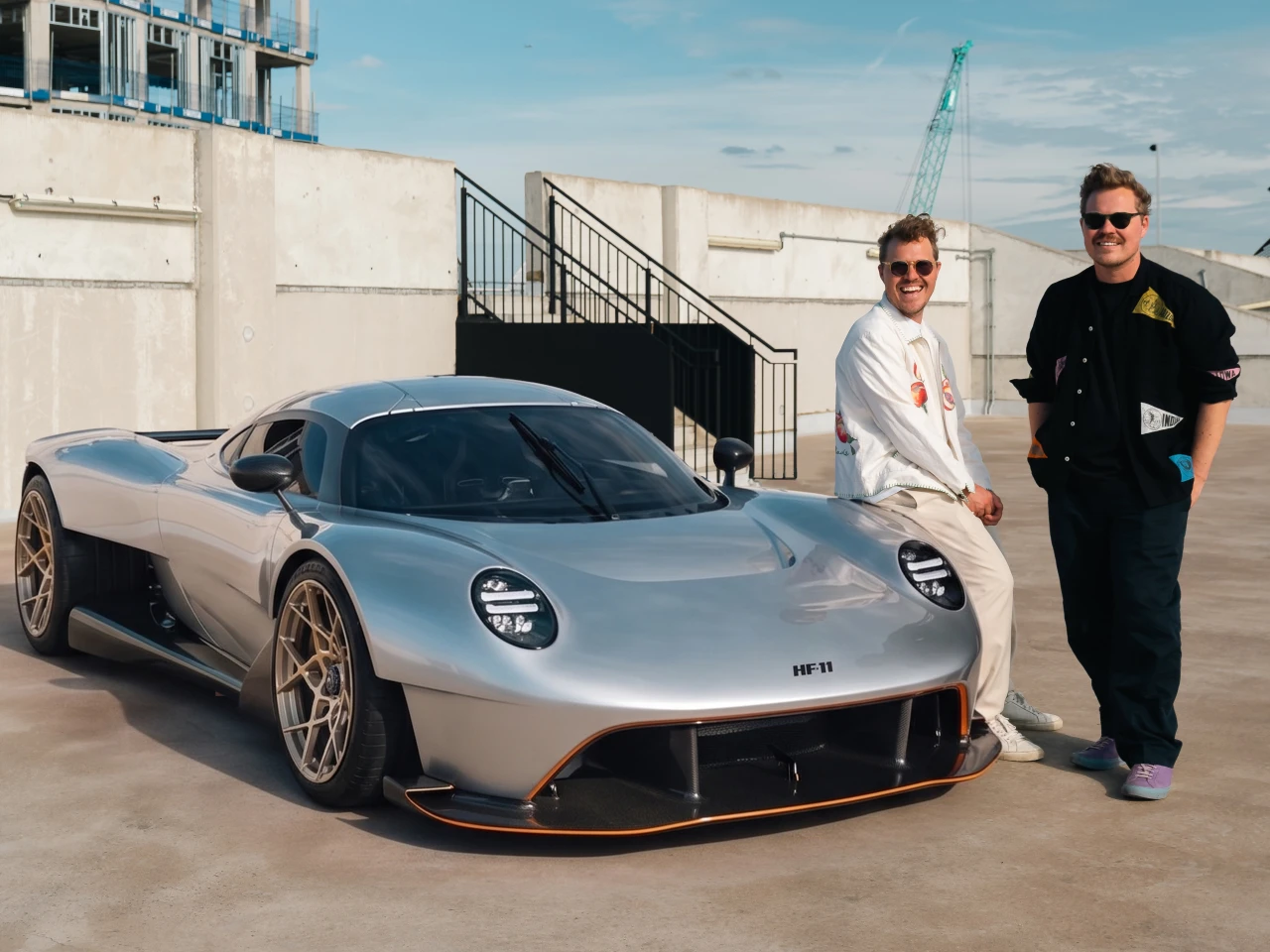
Modern supercars often follow a predictable formula: immense power, large screens, and high prices. Oilstainlab, however, aims to disrupt this norm with a supercar that blends modern technology and classic design, focusing on an engaging driving experience.
After the HF-11 concept gained traction online, the Californian studio is committed to creating a tangible supercar featuring swappable powertrains. This ambitious endeavor is a bold move for a small company in an industry dominated by major manufacturers.
Nikita Bridan, co-founder of Oilstainlab, shared insights into their vision. “We love combustion engines, electric vehicles, technology, the past and the future. Combining them makes the work exciting,” he stated. Bridan and his brother, who founded the firm, have a unique background that includes growing up in Ukraine and Canada, learning about design in Italy, and experiencing startup culture in California.
Initially a design consultancy in 2018-19, Oilstainlab transitioned to building its own car, the Half11, to create physical products. The attention it received led to the development of a new vehicle in 2023, influenced by feedback and interest.
The new car draws design inspiration from the 1966 Porsche 911, but Bridan emphasized the goal of creating an experience for both driver and passenger rather than merely replicating a classic shape. He acknowledged the challenges posed by modern safety regulations and the need to integrate contemporary technology while preserving the essence of classic cars.
Bridan described their vehicle as a “no-excuse” or “no-compromise” car, emphasizing their determination to overcome obstacles in engineering and design. The team is particularly inspired by modern cars like the Gordon Murray T.50, Aston Martin Valkyrie, and Singer’s Porsche 911 restorations, each representing unique engineering approaches.
Addressing the necessity of high-end sports cars, Bridan pointed out that while some may question the value of multimillion-dollar hypercars, they see a broader issue: sports cars are becoming larger and more complex, with electric models facing skepticism from enthusiasts. “We want to retain the things that make driving special: a manual transmission, lightweight construction, sound, and an engaging experience,” he explained. Their vision extends beyond this first car, aiming for a halo vehicle that could lead to more accessible products.
Despite global challenges affecting timelines, Bridan confirmed they are on schedule to showcase the car in Canada on November 7, followed by winter testing in California. The fully finished car is expected to be unveiled in summer 2027.
While the car is not yet operational, Bridan mentioned they are finalizing coolant and brake lines, with testing anticipated to begin in early December. The transition from concept to production has been challenging, requiring a reevaluation of proportions, ergonomics, and engineering without losing the original character.
Sound is a crucial aspect of the vehicle’s identity; they developed a 3D-printed Inconel exhaust system for the original concept. The new model will feature a flat-six engine, promising an exciting auditory experience.
Oilstainlab is also innovating with a unique powertrain concept that allows for entire powertrain swaps, not just batteries. This idea emerged during development as they recognized that combustion and electric configurations share similar thermal requirements. The rear subframe can be detached, enabling the engine and fuel tank to slide out as a single unit with minimal effort.
While there is internal debate about whether owners could perform the swap themselves, it is more likely that a mechanic would assist customers with the conversion. This flexibility aims to provide varied driving experiences. Notably, about 80% of prospective customers have shown interest in the electric configuration, indicating a strong market preference.
The combustion version targets a water-cooled 4.2-liter engine producing approximately 650 hp, while the electric variant is expected to deliver around 850 hp, ensuring high performance and manageability.
Source: New Atlas