

YouTuber Develops Fire-Powered Refrigerator Using Salt and Water
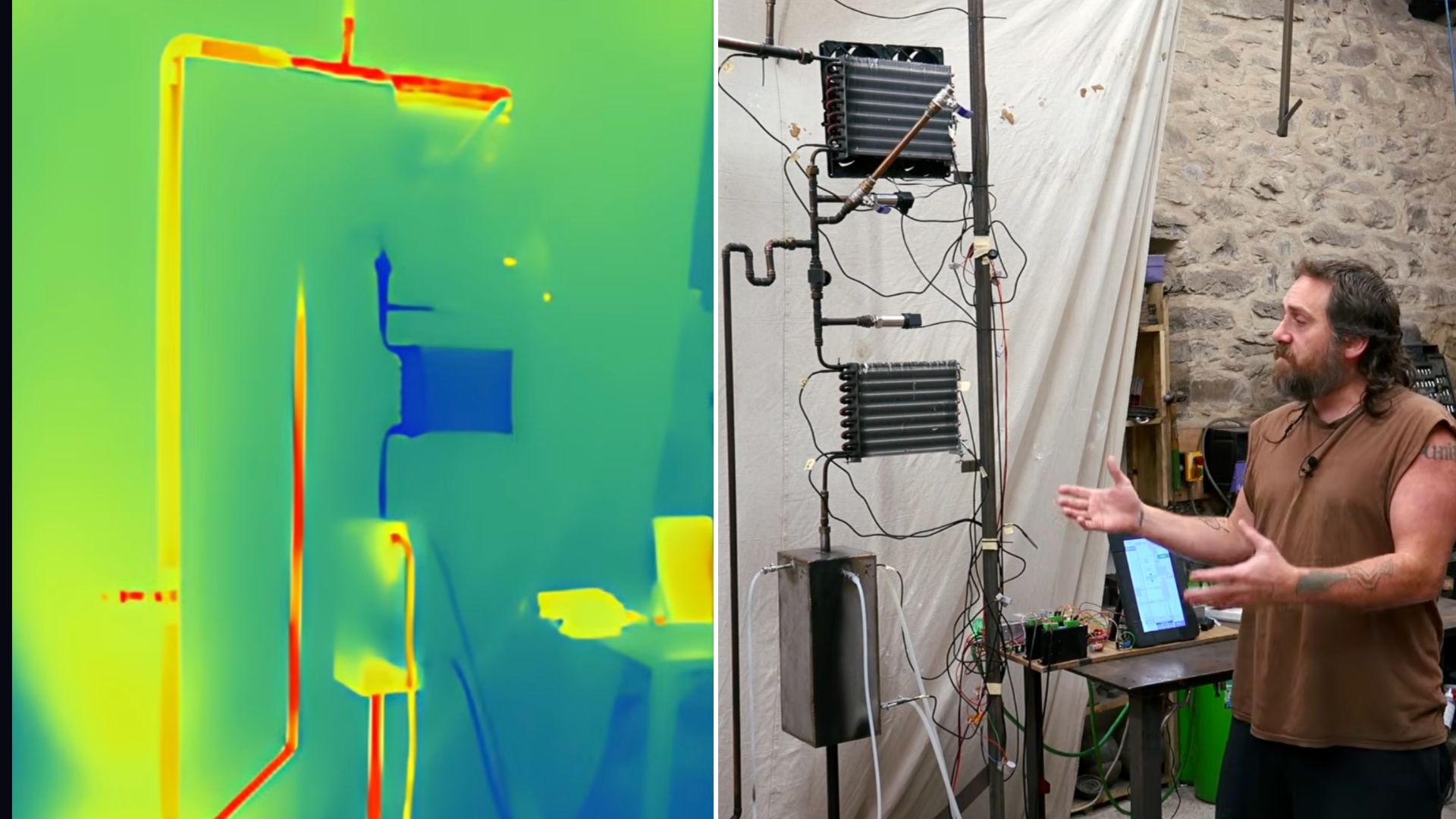
A DIY refrigerator created by Greenhill Forge employs fire, water, and road salt to achieve cooling without a conventional electric compressor. This innovative system operates on the principle of absorption refrigeration, which has been known for over a century.
The experimental setup, showcased in a YouTube video, managed to cool its interior to approximately 5°C (41°F) while the ambient temperature was around 16°C (61°F). Although this represents a significant temperature drop, it remains a prototype rather than a fully functional household refrigerator.
The system consists of two main components: a generator and an absorber. The generator contains a mixture of calcium chloride and distilled water. When heated by a fire, water vapor separates from the solution and travels to a condenser, where it cools and returns to liquid form.
This liquid then flows through a small adjustable valve into an evaporator that operates under a strong vacuum. At this low pressure, about six millibars, water can evaporate at temperatures significantly below its normal boiling point, absorbing heat from the surrounding area and creating a cooling effect.
To maintain the necessary low pressure for cooling, the system sprays concentrated calcium chloride solution into the absorber, which absorbs the vapor. This process allows the fire to provide the heat needed to drive the refrigeration cycle while the salt solution sustains the conditions for evaporation.
Greenhill Forge constructed much of the refrigerator from stainless steel, employing techniques such as welding and silver-brazing for the pipe connections. The cooling coil was formed by freezing water in a tube and then bending it around the frozen core to prevent collapse.
An Arduino-based controller monitors the system’s temperatures and pressures, adjusts pump speeds, and triggers safety alarms. However, the system still requires electricity for its circulation pumps and cooling fans, consuming about 30 to 50 watts.
Despite its reliance on fire for most of the thermal energy, a small solar panel or battery could potentially meet its electrical needs. The initial test results are promising, but the system’s performance in hotter conditions and its ability to maintain safe storage temperatures remain to be evaluated.
This technology is not entirely new, as absorption refrigerators have been used in situations where electrical compressors are impractical. Greenhill Forge’s project explores a DIY implementation using accessible materials and firewood as a heat source.
With further development, such systems could prove beneficial in remote areas where reliable electricity is scarce, offering a practical solution for refrigeration needs.
Source: Interesting Engineering