
Spaceium Introduces $1 OpenPort for Two-Way Spacecraft Refueling
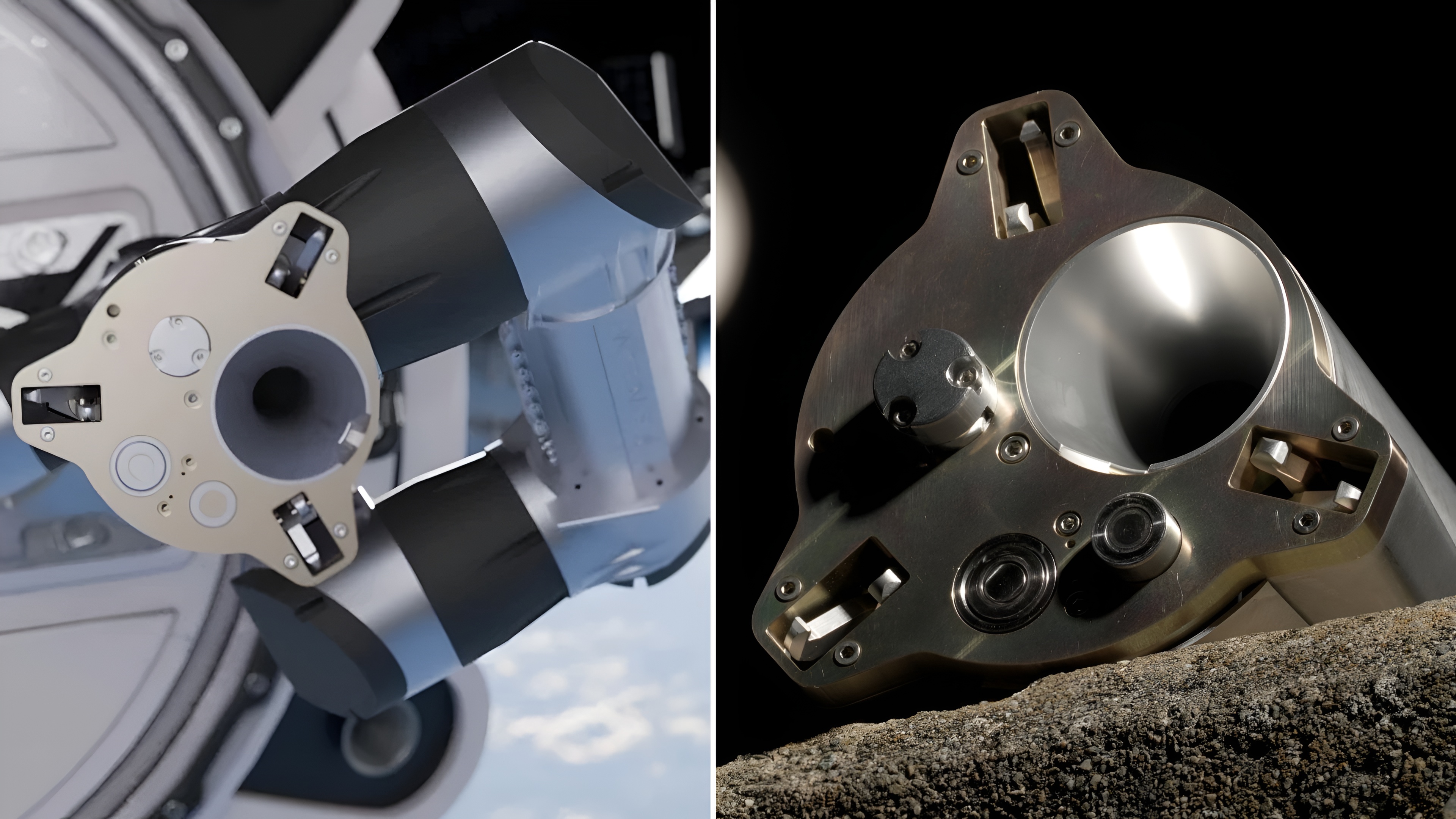
Spaceium has unveiled OpenPort, an open-source spacecraft refueling interface that can be licensed and manufactured for just $1. This innovative design allows two spacecraft to connect and transfer propellant in either direction, potentially revolutionizing satellite operations.
Traditionally, satellites rely on a fixed supply of propellant for their missions. Once this supply is depleted, operators often retire otherwise functional spacecraft, despite their electronics and systems remaining operational. The lack of standardized fueling connections has complicated orbital refueling efforts, as different manufacturers create their own interfaces, leading to compatibility issues.
OpenPort addresses these challenges by providing an identical connection on both spacecraft. Its androgynous design enables either vehicle to supply or receive propellant, allowing for the possibility of one satellite refueling another without the need for dedicated tankers.
Demonstration on the International Space Station
The upcoming demonstration of OpenPort will take place aboard the International Space Station (ISS). Spaceium plans to conduct this test as a NASA-approved external payload through Voyager Technologies’ commercial payload service. During the demonstration, the interface will transfer xenon between two tanks in orbit, marking the first-ever xenon transfer conducted in space.
This mission follows a previous Spaceium mission in February 2026, where its precision robotic actuator successfully completed its first space mission after launching aboard a SpaceX rideshare.
Future of Orbital Refueling
Spaceium aims for OpenPort to become a widely adopted standard within the spacecraft industry. The company envisions automated orbital stations that provide propellant as a service, with every spacecraft equipped with OpenPort potentially becoming a customer. Co-founder and CEO Ashi Dissanayake emphasized that the stations, rather than the ports themselves, represent the core of their business model.
Spaceium, founded by aerospace and mechanical engineers Dissanayake and Reza Fetanat, is part of Y Combinator’s Summer 2024 batch. Its commercial clients include operators involved in orbital transfer vehicles, lunar missions, and geostationary satellites.
The company plans to establish refueling stations in low Earth orbit and geostationary orbit, with long-term ambitions for stations along routes to the Moon. A common refueling connection could extend the lifespans of satellites and enable lunar missions and orbital transfer vehicles to travel further without carrying all their propellant from Earth.
As Spaceium prepares for the ISS demonstration and its first refueling station, the adoption of OpenPort will be crucial in determining whether different spacecraft manufacturers will embrace this shared standard.
Related link: spaceium.com
Source: Interesting Engineering