

Comparing the iPad Mini 8 and Xiaomi Pad 7 Pro: Which Tablet Should You Choose?
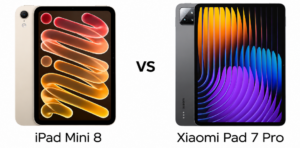
The iPad Mini 8 and Xiaomi Pad 7 Pro present two contrasting approaches to the tablet experience. The iPad Mini 8 features flagship performance and an OLED display in a compact design, while the Xiaomi Pad 7 Pro boasts a larger 144Hz screen, powerful speakers, and a bigger battery at a lower price.
The iPad Mini 8 weighs just 255g and is 5.4mm thick, featuring a glass front, aluminum back, and aluminum frame, which gives it a premium feel. It also offers IP67 dust and water resistance, making it suitable for everyday use. In contrast, the Xiaomi Pad 7 Pro, weighing 500g and measuring 6.2mm thick, is designed more for desk use and entertainment.
Display and Multimedia
The iPad Mini 8 sports an 8.5-inch Super Retina XDR OLED display with a 120Hz refresh rate, 1512 x 2316 resolution, and peak brightness of up to 1200 nits. This OLED technology enhances contrast and visibility. Meanwhile, the Xiaomi Pad 7 Pro features an 11.2-inch 144Hz IPS LCD panel with a resolution of 2136 x 3200, HDR10, Dolby Vision, and 800 nits peak brightness.
While the Xiaomi Pad 7 Pro offers a larger screen and higher refresh rate, the iPad Mini 8 excels in display quality, brightness, and contrast, making it the better choice for portability and display excellence.
Performance and Software
The iPad Mini 8 is powered by Apple’s A20 Pro chipset, built on a 2nm process, featuring a penta-core CPU and 12GB RAM across all models. This configuration is designed for high performance in demanding applications and gaming. The Xiaomi Pad 7 Pro, on the other hand, utilizes Qualcomm’s Snapdragon 8s Gen 3, built on a 4nm process, with an octa-core CPU and Adreno 735 GPU, providing solid performance but lagging behind Apple’s architecture.
In terms of software, the iPad Mini 8 runs iPadOS 27.2, offering a robust application ecosystem, while the Xiaomi Pad 7 Pro operates on Android 15 with HyperOS 2, providing flexibility and multitasking features suitable for its larger display.
Battery and Accessories
The iPad Mini 8 features a 4900mAh battery, which, although modest, is optimized for decent endurance. It supports wired charging that reaches 50% in about 30 minutes. Conversely, the Xiaomi Pad 7 Pro has a larger 8850mAh battery and supports 67W wired charging, achieving approximately 40% charge in 20 minutes, making it more suitable for extended use.
Both tablets support stylus input, but the iPad Mini 8 benefits from Apple’s extensive application ecosystem for creative tasks. The Xiaomi Pad 7 Pro’s larger display enhances the experience for writing and sketching, making it practical for productivity setups.
Camera and Media
The iPad Mini 8 features a 12MP rear camera and a 12MP front camera, both capable of HDR and video recording. The Xiaomi Pad 7 Pro offers a dual rear camera system with a 50MP primary sensor and a 32MP front camera, making it a strong contender for photography and video calls.
Both tablets support 4K video recording, but the Xiaomi Pad 7 Pro has an advantage with its four-speaker setup and Hi-Res audio support, enhancing the multimedia experience.
Pricing
The iPad Mini 8 is priced around $700 or ₹83,000, reflecting its premium features and build quality. In contrast, the Xiaomi Pad 7 Pro is more affordable at approximately $500 or ₹54,000, offering a compelling package for its price.
While the Xiaomi Pad 7 Pro provides better value with its larger display and battery capacity, the iPad Mini 8 justifies its higher price with its OLED technology, newer processor, and portability.
The iPad Mini 8 and Xiaomi Pad 7 Pro cater to different audiences. The iPad Mini 8 is ideal for users seeking a compact, powerful tablet, while the Xiaomi Pad 7 Pro is better suited for those who prioritize screen size and value. The choice ultimately depends on individual preferences regarding portability and functionality.
Source: Gizmochina