

Understanding Hough Transforms and Their Role in Computer Vision
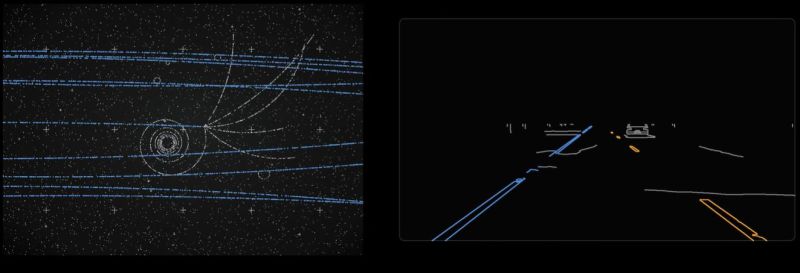
Identifying visual elements may seem instinctive for humans, yet the cognitive processes behind this ability are complex. Our visual system efficiently manages tasks, even under challenging conditions, such as driving at high speeds. To replicate these processes in artificial cognition systems, algorithms like the Hough Transform have been developed, as highlighted in a video by The Synthetic Mind.
The Hough Transform was originally created by Paul Hough in the 1960s for analyzing patterns in bubble chamber photographs. Since then, the algorithm has evolved to detect not only straight lines but also various shapes within images.
Central to the Hough Transform’s function is the identification of points in a scene that may form lines, which necessitates edge detection. However, real-life scenes are often complex, making it challenging to apply the original algorithm effectively. Consequently, optimizations have been introduced to enhance performance and reduce processing time while managing pixel noise.
Once potential lines and object boundaries are identified, the next step in computer vision is to interpret these findings, assess their relevance to the current task, and determine appropriate actions. Additional information from sensors like radar or Lidar can significantly aid this process, especially in applications such as autonomous vehicles.
These examples illustrate the challenges faced in creating artificial cognition algorithms that mimic the effortless capabilities of human perception. The effort required for humans to navigate their environment without constant collisions underscores the complexity of this task.
Source: Hackaday