

Boston Dynamics’ Atlas Robot Transformed with Wheels for Enhanced Mobility
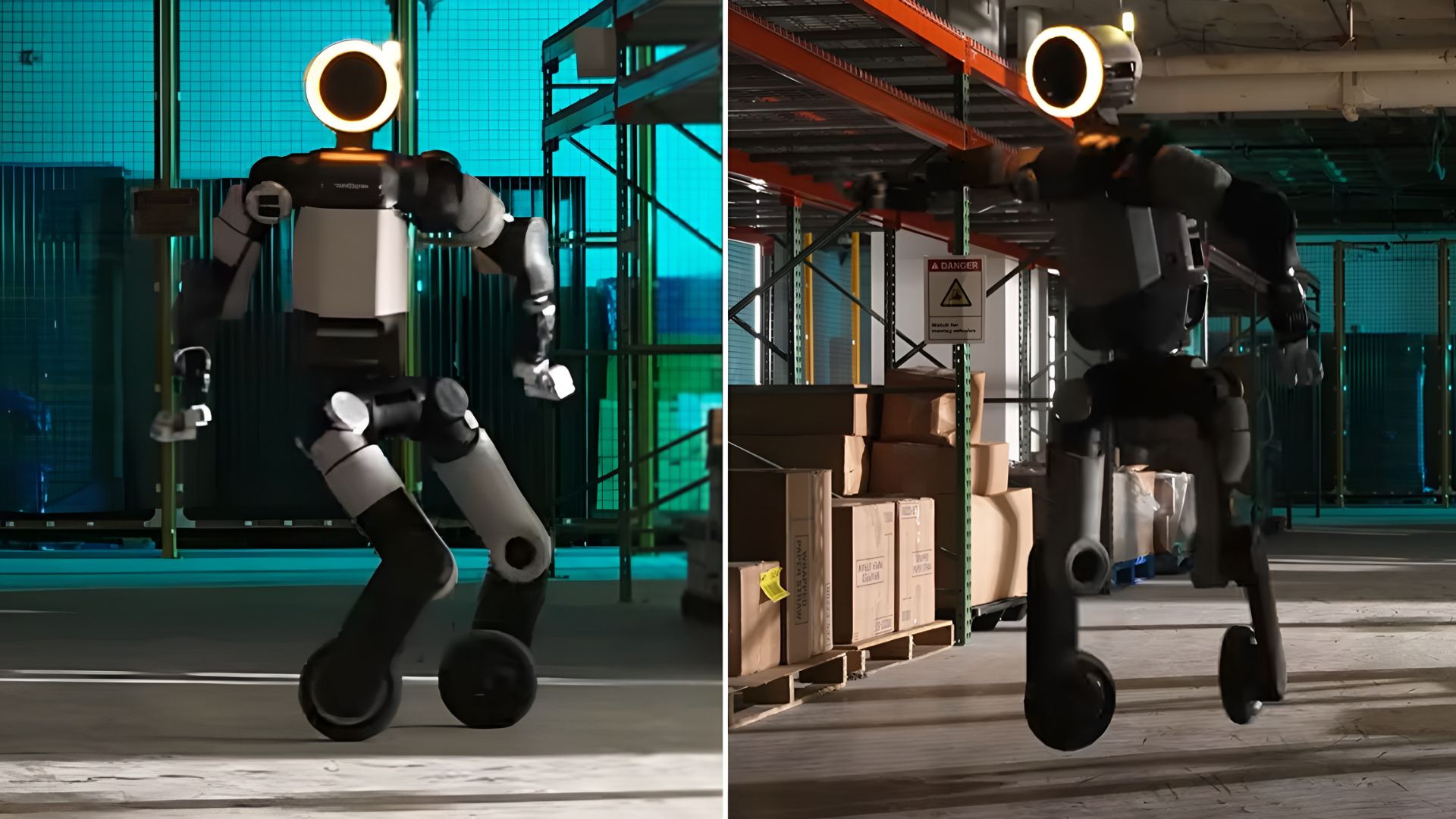
Boston Dynamics has upgraded its Atlas humanoid robot by replacing its feet with wheels, allowing it to explore new movement capabilities. This experimental modification enables engineers to assess how the robot performs under sustained high-speed movement and heavy loads.
The wheeled version of Atlas is not intended for commercial release. Instead, it serves as a research platform to evaluate the effectiveness of simulation-trained controllers on real hardware. The project also investigates the limits of the robot’s actuators.
To implement this change, Boston Dynamics attached standard electric scooter wheels to Atlas using a custom adapter that connects to the robot’s existing ankle actuators. This straightforward modification required no major hardware changes, and the existing software model was adapted to accommodate the new wheels.
This design reflects Atlas’ modular hardware, which was developed for scalability and ease of maintenance. The wheels also impose significant torque demands on the motors, providing a rigorous testing environment for the robot’s actuators.
Reinforcement Learning and New Movements
The experiment allowed engineers to explore reinforcement learning (RL), a technique that trains robots through repeated simulations to discover effective movements. However, transferring these learned behaviors to physical hardware presents challenges due to potential discrepancies between simulated and real-world motor behaviors.
To address this, Boston Dynamics refined its simulated motor models by conducting physical experiments to measure actuator behavior, adjusting simulation parameters accordingly. The team also modified existing RL frameworks to enhance Atlas’ rolling movements.
Some of Atlas’ new movements were inspired by human motion-capture recordings, particularly those involving significant foot sliding. For instance, the robot learned to steer its wheels for sideways dashes instead of dragging its feet. Additionally, Atlas successfully executed a 360-degree jump on its first attempt using a trajectory-tracking controller.
Future Implications
Boston Dynamics believes that the insights gained from this wheeled experiment will influence the development of Atlas’ standard configuration. The goal is to combine accurate actuator models with whole-body learning to enhance reliability and expand the robot’s capabilities.
This initiative ultimately provides engineers with a demanding test environment to understand how motors and learned controllers interact under extreme conditions.
Source: Interesting Engineering