

Enhancing Aluminium Anodes in Lithium Batteries Through Magnesium Alloying
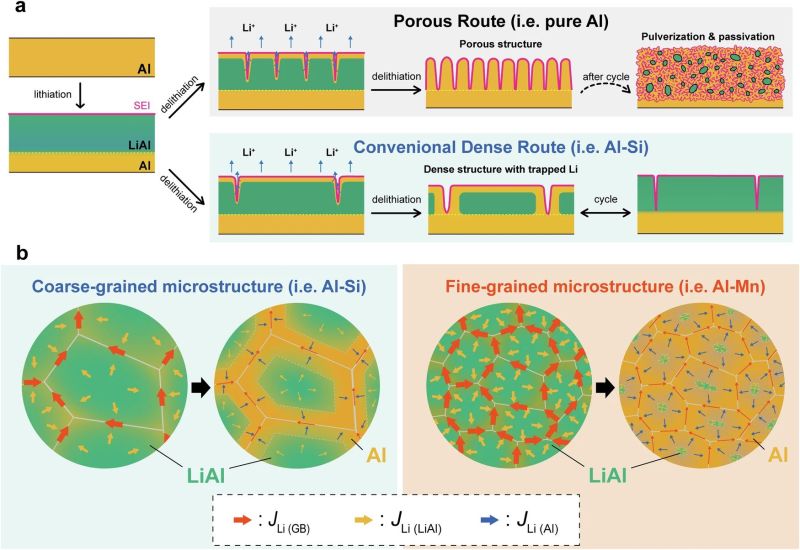
Lithium-ion batteries typically use graphite anodes, which offer chemical stability but suffer from limited capacity. In contrast, metal alloy anodes, including aluminium, silver, and magnesium, present significant advantages, particularly in terms of higher capacity and improved charge/discharge rates. However, the formation of lithium-metal compounds can lead to durability issues due to volumetric expansion.
Researchers Yuki Nakata and colleagues have explored these challenges in aluminium anodes, as detailed in their article published in Communications Materials. They highlight the limitations of standard aluminium (Al) foil anodes and propose that alloying aluminium with magnesium (Mg) can mitigate these issues.
A primary concern with aluminium anodes is the entrapment of lithium beneath a lithium-depleted aluminium surface. This condition necessitates delithiation through the formation of cracks and pores in the aluminium. By incorporating magnesium into the aluminium alloy, the researchers aim to reduce the formation of these lithium-depleted regions and alleviate other destructive mechanisms.
While the solution is not flawless, as surface degradation persists after numerous charge cycles, the authors suggest that applying surface coatings could help manage the stress caused by volumetric changes. This approach may pave the way for the development of lithium-ion cells utilizing aluminium-magnesium anodes.
Source: Hackaday