

Teardown of iPhone Duo Reveals Unique Dual-Battery and Hinge Design
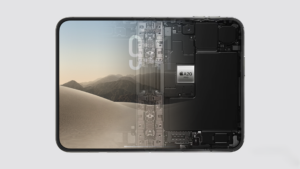
Just days after Apple’s first foldable phone hit shelves, repair specialists have already conducted a teardown. Early videos from channels like REWA Technology and Phone Repair Guru showcase a device that is distinctly different from a standard iPhone. Apple has clearly engineered this model specifically for the folding form factor.
The most notable feature revealed is the dual-battery arrangement. The iPhone Duo houses one battery in each half: a larger 2,962 mAh cell and a smaller 1,921 mAh cell, totaling 4,883 mAh. Both batteries are secured with electrically activated adhesive, allowing technicians to release them by applying a low charge. Interestingly, the phone can continue to operate even if one battery is disconnected.
The logic board has undergone a complete redesign. The traditional stacked “sandwich” layout seen in recent iPhones is absent. Instead, the main board is smaller, with the A20 Pro chip positioned adjacent to 12 GB of RAM and a vapor chamber for improved heat management. A secondary board connects the two halves via a flexible cable, and the USB-C port is modular, making it easier to replace.
Accessing the foldable inner display is more complicated. Technicians must remove both the rear panel and the outer display before reaching the batteries and screen assembly. The inner OLED is secured with substantial adhesive and linked by delicate ribbon cables that also connect the under-display selfie cameras.
A matte nano-textured film on top of the glossy layer helps conceal the crease and reduce glare, but it complicates repairs. Replacing the spring-loaded hinge or the inner display is expected to be time-consuming and costly.
Apple has released an official repair manual that covers various components, including batteries, displays, the hinge, and the Touch ID button. While some parts, like the modular charging port, are rated favorably for serviceability, others remain fragile and expensive to replace. Users are advised to keep a protective case on their devices and consider AppleCare+ or similar coverage, as repairs for the screen or hinge could be quite costly.
(Sources: REWA Technology | Phone Repair Guru)
Source: Gizmochina