

Why Quitting Your Job Might Be Your Best Decision Yet
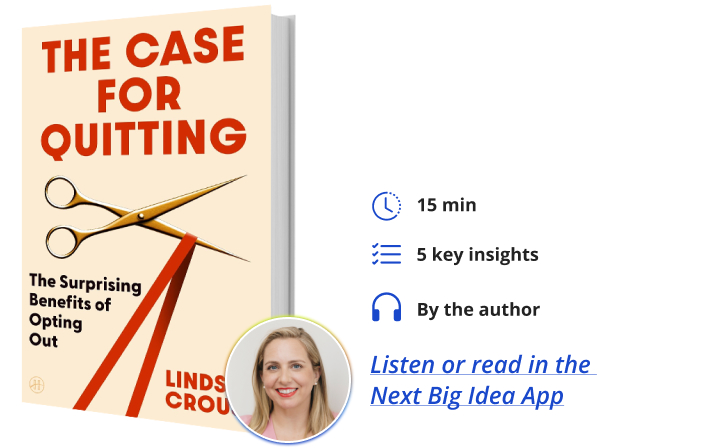
Lindsay Crouse, a marathon runner and journalist with 15 years at The New York Times, discusses the value of quitting in her new book, The Case for Quitting: The Surprising Benefits of Opting Out. Her reporting has notably contributed to maternity rights for pregnant Nike athletes.
What’s the Big Idea?
Crouse argues that quitting is not synonymous with failure. Recognizing when to abandon a goal that no longer serves one’s interests can liberate time, energy, and opportunities to pursue more fulfilling endeavors.
For those interested, an audio version of this Book Bite is available, read by Crouse herself, on the Next Big Idea App.
1. Perseverance Can Work Against Us
While perseverance is often celebrated, Crouse warns that it can lead to negative outcomes when applied to unachievable goals. Misplaced perseverance can result in expending valuable resources—time, energy, and money—on pursuits that ultimately lead to frustration and unhappiness.
She shares the story of a woman who invested a decade and significant savings into fertility treatments, only to realize they were ineffective. After quitting those efforts, she was able to rebuild her life and eventually became pregnant naturally. Another example is an aspiring Olympian whose relentless training led to injuries, transforming her passion into a burden. For both women, quitting was a necessary step to redirect their energy toward more attainable goals.
2. Fear of Quitting Is Often Misplaced
Crouse notes that fear often paralyzes individuals contemplating quitting, primarily due to concerns about judgment from others. This fear is frequently unfounded, as people tend to focus more on their own lives than on the decisions of others.
For instance, an actress who quit her career felt pressured by the expectations of those around her but discovered that their reactions were supportive rather than critical. Crouse emphasizes that research indicates people often regret inaction more than the act of quitting itself. Thus, the fear of making a decision should be greater than the fear of quitting.
3. Testing the Waters Usually Beats a Cannonball
Crouse suggests that quitting does not have to be a drastic, impulsive act. Instead, individuals can gradually transition to new opportunities. Research shows that entrepreneurs who maintain their current jobs while exploring new ventures tend to succeed more than those who quit outright.
She cites the example of R&B legend Bill Withers, who balanced a factory job while pursuing music. It was only after he was laid off that he fully embraced his musical career, having built a foundation that allowed him to succeed.
4. Women’s Endurance Can Become a Weakness
Crouse highlights that women often possess unique qualities that enable them to endure challenges, but this endurance can sometimes hinder their well-being. While women tend to live longer than men, they often face chronic health issues and lower income levels.
She questions whether this endurance is beneficial in the long run, urging women to learn when to moderate their perseverance to avoid negative consequences.
5. Quitting Can Be the Path to Better
Reflecting on the story of the aspiring Olympian, Crouse notes that after quitting track, the woman found new interests and eventually returned to running for enjoyment rather than competition. This shift led her to achieve remarkable success, including setting a national marathon record.
Crouse concludes that quitting should be recognized as a legitimate option rather than a failure, as it can often lead to unexpected opportunities and personal growth.
Related link: nextbigidea.app.link
Source: Fast Company Work Life