

Research Explores Helium Bubbles to Maintain Cleanliness in Molten Salt Reactors
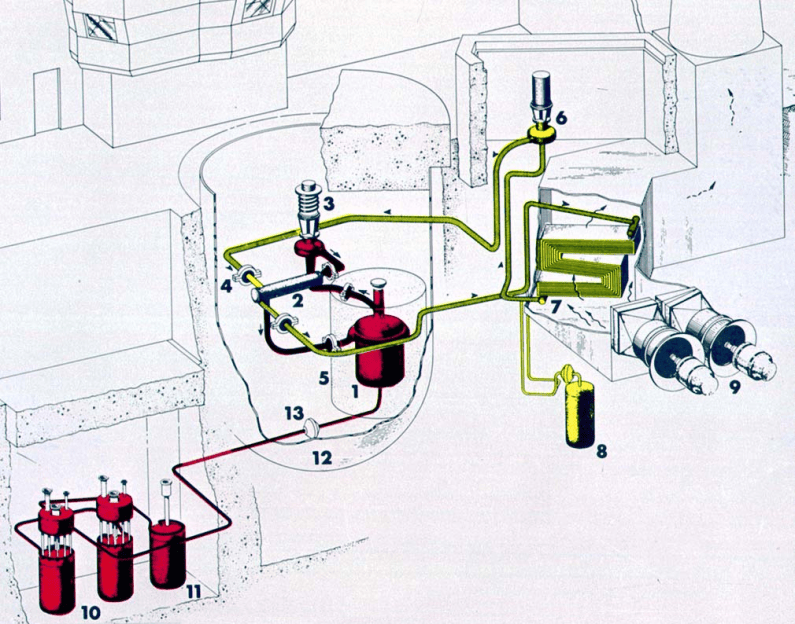
Researchers Huihua Yang and colleagues from Argonne National Laboratory and Rensselaer Polytechnic Institute have reported a method to maintain cleanliness within molten salt reactors (MSRs) by preventing the accumulation of elemental metal contaminants.
Molten salt fission reactors, where fuel is mixed with salt coolant, offer several advantages, including inherent safety and straightforward refueling processes. However, a challenge arises from the formation of noble metals such as tellurium and palladium, as well as semi-noble metals like silver, which tend to remain in their metallic forms and accumulate within the reactor.
As fission products, noble gases like xenon and krypton naturally build up and are removed from the system. Researchers have found that adding helium can help encourage metal particles to exit the reactor, even if they do not dissolve in the salt medium. This concept was previously noted in the US Molten Salt Reactor Experiment (MSRE) project, as highlighted in a 2022 paper by Frederix.
The principle behind this approach is that small bubbles of helium can inhibit the deposition of metals on reactor surfaces. The recent study by Yang et al. provides simulation-based evidence suggesting that sufficient helium bubbles can significantly reduce the buildup of noble metals.
With designs like China’s TMSR-LF1 gaining traction in upcoming nuclear-powered cargo ship projects, methods to further minimize maintenance costs and downtime are increasingly valuable.
(Top image: MSRE plant diagram, source: ORNL)
Source: Hackaday