NVIDIA Showcases Advances in Robot Training at CoRL 2026
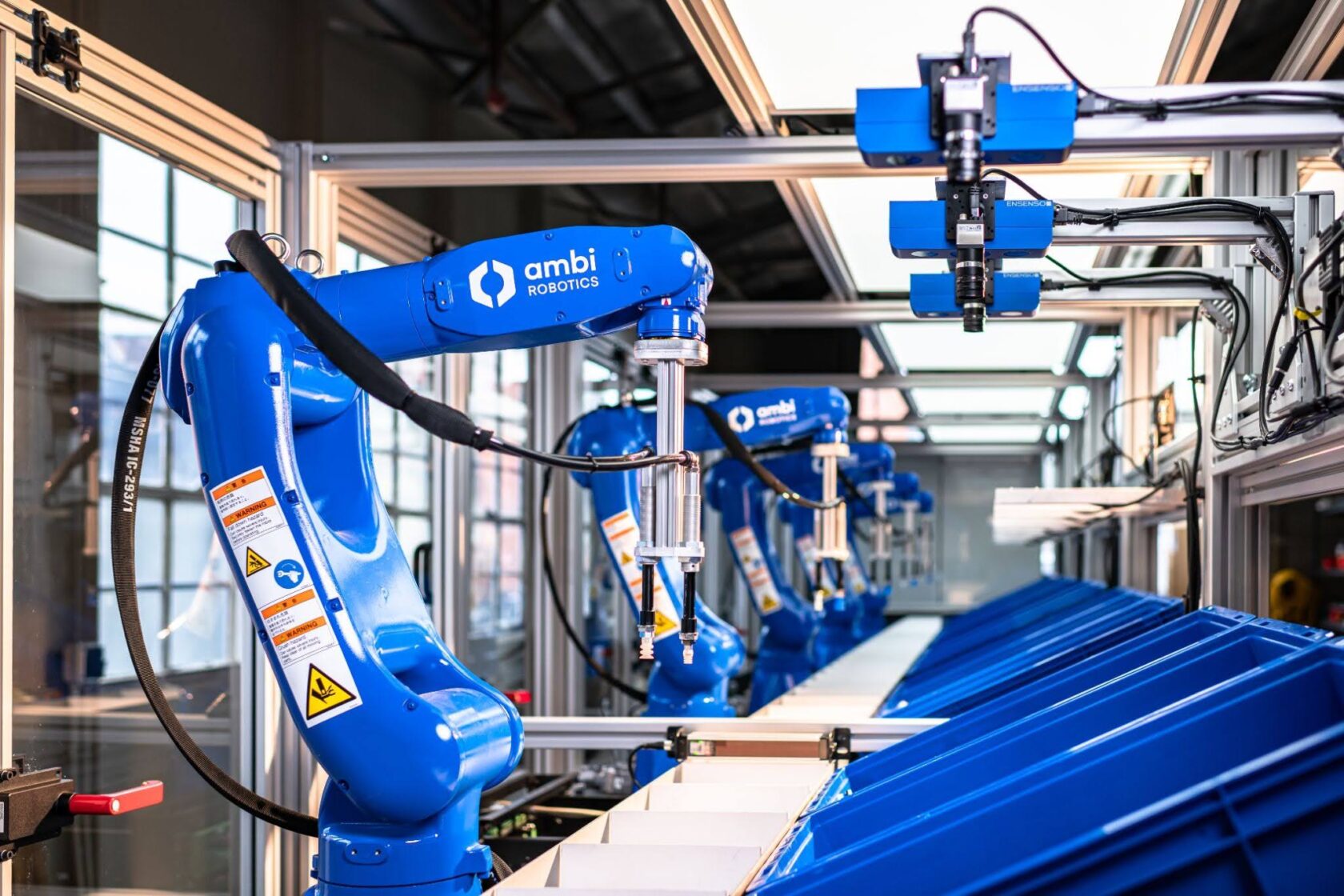
At the Conference on Robot Learning (CoRL) in Austin, Texas, NVIDIA is highlighting advancements in robot training technologies that enable robots to perform delicate tasks such as aligning gears, connecting cables, and assembling small components. This shift from locomotion to manipulation is central to the conference’s discussions.
NVIDIA is introducing new open robotics technologies, including world action models, simulation tools, benchmarks, and agentic workflows. Two NVIDIA papers are among six finalists for the Best Paper Awards at CoRL.
- GRAIL (Generating Humanoid Loco-Manipulation from World Models) presents a digital generation pipeline for 3D assets and simulator-ready scenes for robot learning.
- RoboTTT: Context Scaling for Robot Policies introduces a robot model and training recipe that scales visuomotor context significantly beyond current policies without increasing inference latency.
These advancements are designed to help researchers train robots on complex tasks, evaluate their performance under varying conditions, and utilize failures to enhance learning, ultimately building the precision and adaptability required for industrial deployment.
NVIDIA collaborates with various partners, including Ambi Robotics, Bosch Research, Dexmate, and Siemens, to advance these technologies within the robotics community.
World Action Models Enable Next Level of Robot Autonomy
The next level of robot autonomy necessitates that robots perceive their surroundings, anticipate the consequences of their actions, and execute complex, multistep tasks with high precision. World action models facilitate this capability.
NVIDIA is introducing GR00T 2, an open frontier world action model built on NVIDIA Cosmos. Trained on a diverse dataset, including 100,000 hours of NVIDIA open source human egocentric data, the model enables robots to learn dexterous manipulation skills. Key features include:
- Out-of-the-box performance: Completed 40 of 50 evaluated tasks at least once without task-specific demonstrations.
- Skill transfer: Learns from human demonstrations and transfers skills between different robot bodies without requiring robot demonstrations.
- Generalization with little data: Achieved 71% average success across 50 tasks with just one demonstration per task, increasing to 95% with five.
- Agent control: AI agents can utilize GR00T 2’s application programming interface to run skills in sequence and recover from errors.
GR00T 2 ranks among the top three models across various benchmarks, with multiple leaderboard wins. Companies like Nexuni and Foxconn are testing it for robotic laundry handling and factory automation, respectively.
Training capable robots requires diverse data. NVIDIA’s open workflows and models enhance tools for data collection and annotation:
- NVIDIA’s new open Video to Data workflow converts human video into simulated robot demonstrations, with a challenge inviting researchers to advance it.
- The NVIDIA EgoHand open model reconstructs 3D hand motion, trained with data from Noitom Robotics.
Where the Training and Scaling Happens — in Simulation
A pretrained model provides robots with a core set of skills, while simulation enables researchers to train, refine, and evaluate these skills at scale before deploying them on physical robots.
NVIDIA Isaac Lab, an open-source robot-learning framework, supports this work. Its latest release, Isaac Lab 3.0, allows researchers to quickly set up training environments with simulation-ready assets and apply a new reinforcement post-training library to foundation models like GR00T.
Accurate physics is essential for transferring learned skills from simulation to real robots. Integration with Newton, an open-source physics engine, allows Isaac Lab to model deformable objects and complex articulated systems.
Together, Isaac Lab and Newton enable researchers to train thousands of simulated robots in parallel. In a vision-based dexterous manipulation benchmark, Isaac Lab 3.0 with Newton achieved up to 2.5 times the training throughput of its predecessor.
Developers are extending Newton’s capabilities. At CoRL, Skild AI announced STEEL, a new rigid-body physics solver built on Newton to accelerate robot training with Isaac Lab.
FieldAI is employing Newton, Isaac Lab, and Isaac Sim to train and validate robot policies for deployment in unstructured real-world environments. Dyna Robotics is demonstrating how parallel simulation in Isaac Lab aids in training whole-body controllers.
https://blogs.nvidia.com/wp-content/uploads/2026/11/groot-2-shipping-label.mp4?_=1Related link: nvidia.com
Source: NVIDIA Blog