

Cornell University Researchers Cut Lithium-Ion Battery Formation Time by 60%
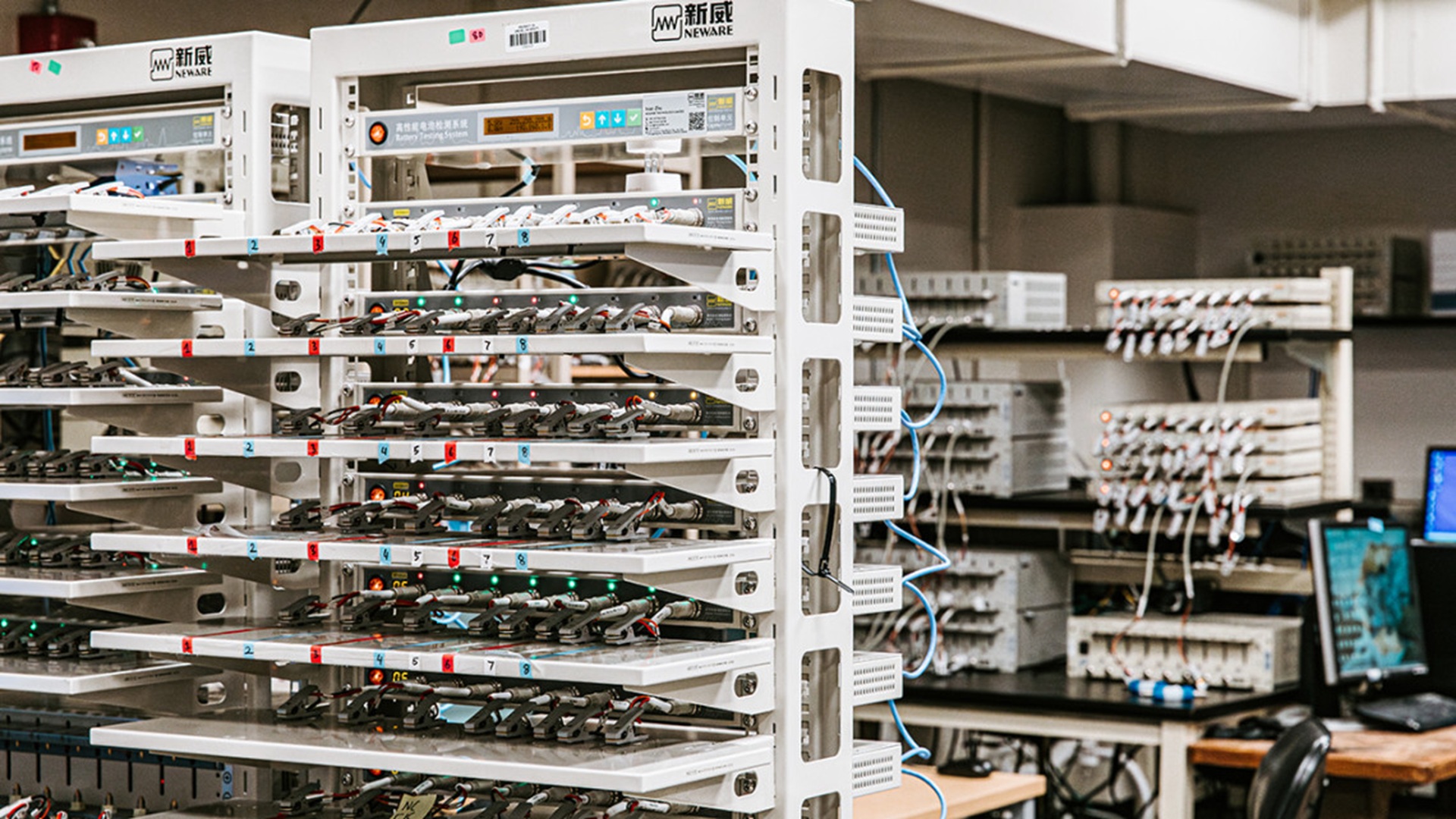
Researchers at Cornell University have introduced a method that significantly reduces the formation time of lithium-ion batteries by up to 60%. This advancement could lead to savings of up to $100 million for large-scale battery manufacturing facilities.
In collaboration with Charge CCCV (C4V), a New York-based battery company, the researchers utilized real-time measurements to monitor chemical changes during the initial charging and discharging cycles of batteries. The formation process, which creates protective layers within the battery, is one of the most time-consuming and costly stages of lithium-ion cell production.
According to the researchers, the formation process accounts for about one-third of the total production costs and occupies roughly a quarter of the manufacturing floor space. By accelerating this stage, manufacturers could alleviate production bottlenecks, optimize factory space, and potentially decrease electricity consumption by an estimated 10% to 15%.
Real-Time Monitoring Techniques
The traditional battery formation process involves multiple charging and discharging cycles under strictly controlled conditions to establish protective interfaces between the electrodes and the electrolyte. However, manufacturers often lack visibility into the development of these layers during the process, making it challenging to predict long-term battery performance.
Vibha Kalra, a professor of chemical engineering at Cornell and the study’s principal investigator, noted that evaluating formation processes typically relies on trial and error, which can take months or even years. To overcome this limitation, the researchers combined two diagnostic techniques: operando Raman spectroscopy, which tracks chemical changes at electrode surfaces, and electrochemical impedance spectroscopy, which measures changes in electrical resistance.
This combination allowed the team to monitor the formation of protective layers and identify when key chemical and electrical properties stabilized. They discovered that slower charging led to more uniform, inorganic-rich protective layers, which are crucial for stable battery performance. Conversely, the discharge stage could be accelerated without compromising the formation process.
Testing and Results
Using their findings, the researchers developed two accelerated formation protocols and tested them at C4V’s facility in Binghamton, New York. Both protocols demonstrated performance comparable to conventional methods while achieving a reduction in formation time of approximately 60%.
Shalabh Gupta, system engineering manager at C4V, emphasized the importance of collaboration between research institutions and manufacturers in advancing the battery industry. He noted that formation also represents about one-quarter of a battery factory’s electricity consumption, and reducing formation time could lower overall electricity use by 10% to 15%.
For large-scale operations producing over 10 gigawatt-hours of batteries annually, this innovative approach could lead to significant cost reductions, potentially amounting to $100 million in savings. However, these projections remain unverified as commercial results.
The research received support from the National Science Foundation’s Energy Storage Engine in Upstate New York, which aims to foster collaboration between universities and industry partners to enhance battery technology. The findings were published in the journal Energy Storage Materials.
Source: Interesting Engineering