

Creality’s new K3 printer swaps between four nozzles in seconds
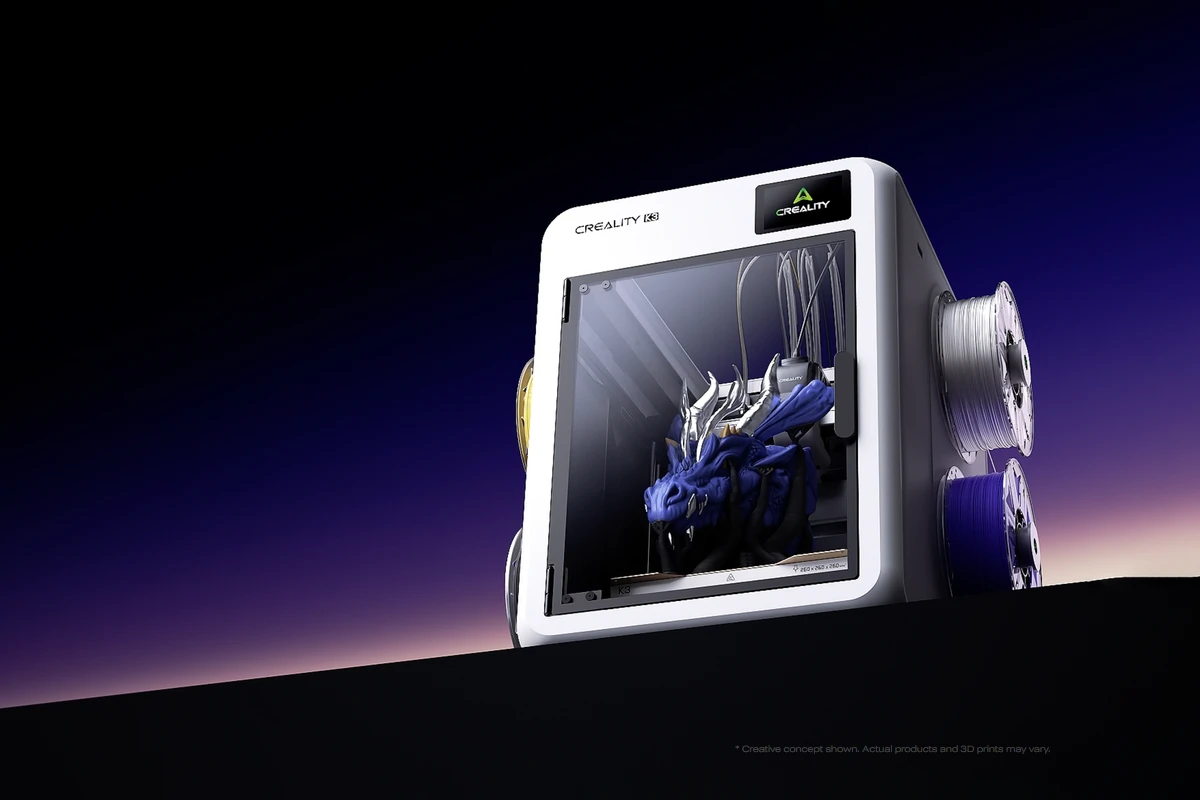
For all the extraordinary things that consumer 3D printers can produce, changing color has remained a surprisingly messy business. Want to print something in red, white, and blue? Certainly. Just be prepared for the machine to spend a considerable amount of time producing a small mountain of plastic waste alongside your masterpiece.
Creality thinks it has a better answer. Its new K3 printer uses four interchangeable nozzles, swapping between them in just 4.8 seconds, and the company claims the system can reduce filament waste by up to 85% while cutting printing time by as much as 80%.
Those are impressive numbers, but the interesting part is how Creality has arrived at them. Rather than finding a cleverer way to change filament, it’s changing the hardware that delivers it.
The colorful history of plastic spaghetti
In the early days of affordable desktop 3D printing, producing an object in more than one color generally meant pausing the machine and changing filament manually or investing in a printer with multiple extruders. Neither was particularly elegant. By 2015, New Atlas was covering innovations such as the Diamond Hotend, which combined three filament feeds into a single nozzle, although even that approach could produce waste towers when changing colors.
As the technology matured, automated filament-changing systems offered a more convenient solution. Devices such as Prusa’s Multi Material Upgrade, Mosaic’s Palette, and later, Bambu Lab’s Automated Material System (AMS) made multi-color printing far more accessible, without requiring manufacturers to redesign their printers around multiple print heads.
The compromise is that many of these systems still share a single nozzle. Imagine a piping bag filled with red icing. Now imagine trying to make the next decoration white. Simply changing the icing going into the bag won’t help much; there’s still red icing inside the nozzle. You have to squeeze it out until the white comes through cleanly.
A 3D printer faces essentially the same problem. Each color change requires it to unload one filament, load another, and purge the remaining molten plastic. Depending on the machine and settings, that material ends up in a purge tower built alongside the print, or in a collection of little plastic doll’s-house-looking spaghetti balls, affectionately known as printer poop.
Changing the nozzle instead of the color
Creality’s answer is called KliTek, a four-channel system that takes a slightly different approach. Instead of exchanging the entire print head, the K3 swaps a smaller assembly containing the nozzle, hotend, and filament path.
Each assembly keeps its own filament loaded, ready for the next time it’s needed. When a print requires another color or material, the machine parks the current nozzle and collects the appropriate replacement.
Creality quotes 4.8 seconds for the mechanical exchange, although a complete color or material change takes approximately 15 seconds. That’s still a considerable improvement over repeatedly withdrawing, reloading, and purging filament through a shared nozzle.
Importantly, this isn’t four nozzles printing simultaneously. The K3 uses one at a time, selecting whichever is required for the next section of the object.
The company claims its system can reduce filament waste by up to 85% and printing time by up to 80% compared with conventional single-nozzle multi-color methods. These are manufacturer figures rather than independently established results, and the savings will depend on the model, its color distribution, and the number of changes required.
Nevertheless, the principle makes sense: if the old color never has to be flushed out of the nozzle, there’s much less reason to manufacture a pile of plastic poop. There’s an environmental benefit here, too. Although we’ve seen innovations in recycling discarded filament, much of the plastic waste produced by home printers has no straightforward route back into production. Avoiding it in the first place makes far more sense, even if the K3’s additional hardware and energy requirements complicate the question of its overall environmental footprint.
A less wasteful future?
Creality expects the K3 to launch internationally for less than US$900, although final pricing and availability remain to be confirmed.
It’s entering an increasingly competitive market. Bambu Lab has introduced its Vortek nozzle-changing system, while Prusa has pursued multi-toolhead designs. Then there’s LightMake’s L4, which takes things further with four independently moving print heads capable of operating in parallel. Creality’s approach is rather different, swapping smaller nozzle assemblies instead of complete print heads, and potentially bringing the benefits of multi-nozzle printing to a more affordable machine.
The K3 isn’t the first printer to change tools, and it certainly won’t be the last. Its significance may lie in making the idea accessible to a much wider audience.
For years, consumer 3D printing has accepted wasted plastic as the price of printing in multiple colors. The K3 suggests we may no longer need to make that compromise.
Source: New Atlas